Launch News
SpaceX Launches Bandwagon-5 Mission from Cape Canaveral, Carrying 32 Payloads into Space
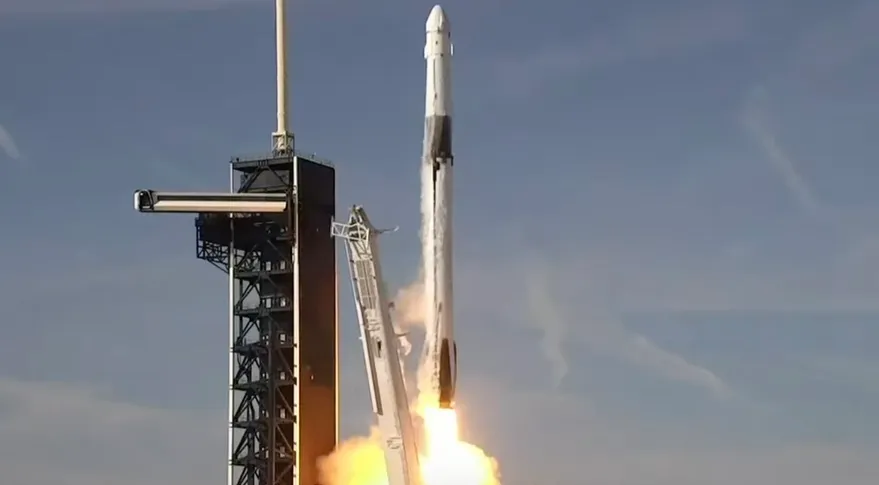
A Falcon 9 rocket lifted off Tuesday morning on SpaceX's fifth Bandwagon rideshare mission, carrying commercial satellites and experimental reentry vehicles as a veteran booster completed its 19th flight.

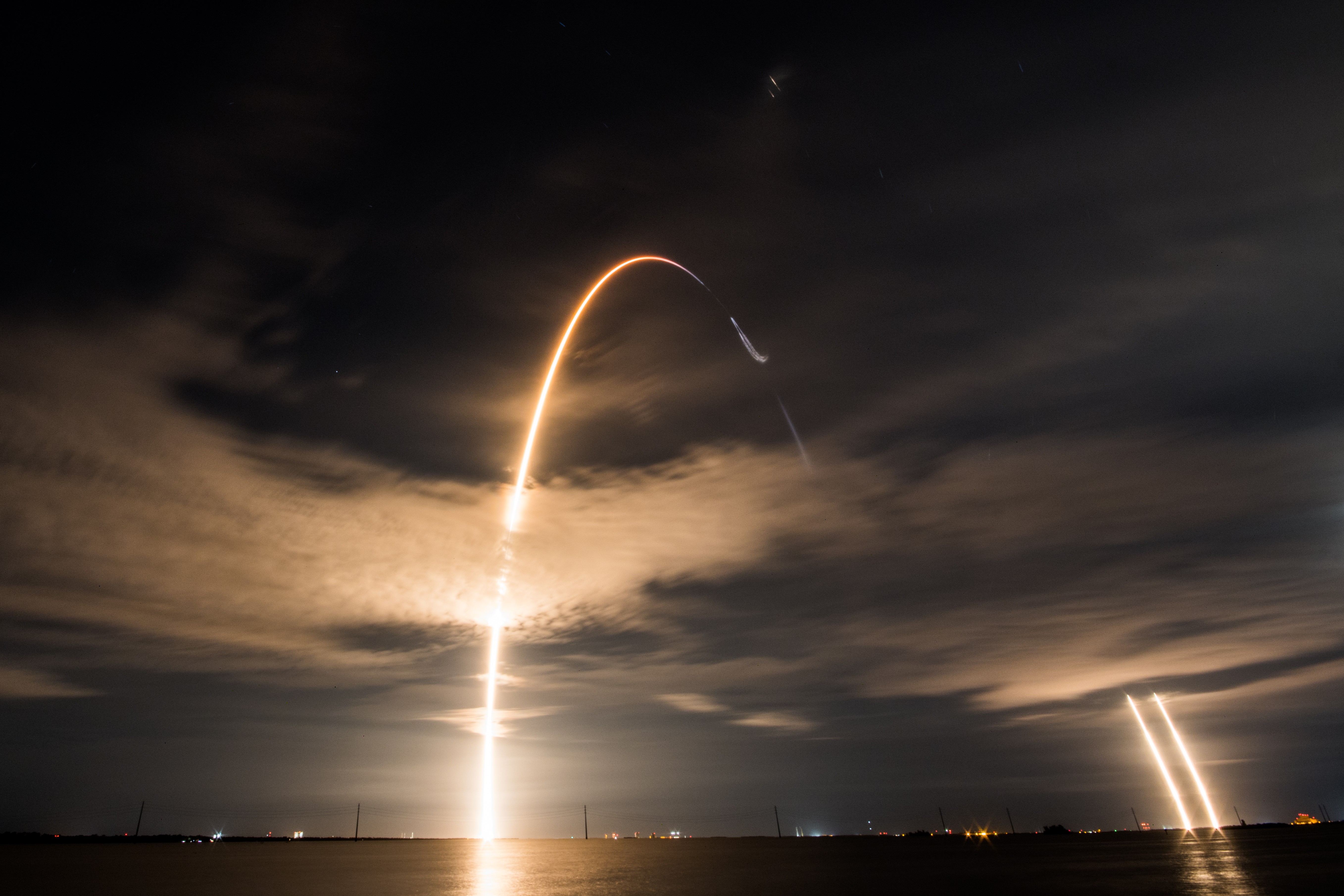
CAPE CANAVERAL, Fla. — SpaceX launched its Bandwagon-5 rideshare mission early Tuesday morning, sending 32 payloads into space aboard a Falcon 9 rocket from Space Launch Complex 40 at Cape Canaveral Space Force Station.
The rocket lifted off at 7:04 a.m. EDT, following a one-day delay caused by unfavorable weather conditions in the Atlantic Ocean booster recovery area. The mission carried a combination of CubeSats, microsatellites, and reentry vehicles for commercial and institutional customers.
Bandwagon-5 is the fifth mission in SpaceX's dedicated mid-inclination rideshare series, which provides satellite operators with shared access to low Earth orbit without requiring them to purchase an entire launch vehicle.
Falcon 9 Booster Completes 19th Flight
The mission utilized Falcon 9 first-stage booster B1085, which was making its 19th flight after previously supporting several high-profile missions.
Among its earlier assignments were NASA's Crew-9 astronaut mission, the privately funded Fram2 human spaceflight mission, Firefly Aerospace's Blue Ghost Mission 1, and multiple commercial communications satellite deployments.
The booster has also supported 10 Starlink missions, demonstrating SpaceX's continued reliance on flight-proven hardware to support a high launch cadence.
Following stage separation, B1085 performed a series of maneuvers before descending toward the autonomous droneship A Shortfall of Gravitas, positioned in the Atlantic Ocean.
Approximately nine minutes after liftoff, the booster successfully landed on the vessel, completing another recovery for SpaceX's reusable Falcon 9 fleet.
While the first stage returned to Earth, Falcon 9's second stage continued carrying the mission's payloads toward their planned destinations.
Thirty-Two Payloads Share the Journey
Bandwagon-5 carried spacecraft representing several areas of commercial space activity, including communications, navigation, remote sensing, and advanced spacecraft technology.
Mission integrator Exolaunch coordinated 20 of the customer payloads, including four radio-frequency monitoring satellites for Virginia-based HawkEye 360.
The mission also included four satellites for Finnish satellite operator ICEYE, which operates a synthetic aperture radar constellation capable of imaging Earth's surface regardless of cloud cover or daylight conditions.
California-based Xona Space Systems launched six satellites supporting its efforts to develop a commercial satellite navigation network.
The range of spacecraft aboard Bandwagon-5 reflects increasing demand for frequent access to low Earth orbit from companies developing specialized satellite constellations.

SpaceX Flies Starfall Reentry Capsule Again
One of the mission's more unusual payloads was Starfall, an experimental reentry spacecraft developed by SpaceX.
The vehicle made its second demonstration flight following its introduction earlier this year.
Starfall is intended to support research and manufacturing in microgravity while eventually enabling the return of materials and experiments to Earth.
According to regulatory documentation, the spacecraft measures approximately 3.1 meters in diameter, has a mass of roughly 2,100 kilograms, and is designed to accommodate up to 1,000 kilograms of payload.
SpaceX has disclosed relatively few operational details about the spacecraft or the specific objectives of its latest demonstration.
Another reentry vehicle aboard the mission was Varda Space Industries' W-7 spacecraft.
Varda is developing orbital manufacturing technology focused on producing and studying pharmaceutical materials in microgravity. The W-7 mission includes research involving the crystallization and solubility of a potential cancer-treatment compound.
Expanding Commercial Access to Orbit
SpaceX introduced its Bandwagon program to provide additional launch opportunities to mid-inclination orbits, complementing its Transporter rideshare missions.
By combining multiple customers aboard a single Falcon 9, the company can distribute launch costs while offering smaller satellite operators access to established launch infrastructure and reusable rockets.
With Bandwagon-5 launched, attention now turns to the individual spacecraft as operators begin commissioning their satellites, establishing communications, and verifying onboard systems.
The mission also adds another flight to SpaceX's expanding 2026 launch record as the company continues supporting commercial, scientific, and government missions from Florida's Space Coast.