Launch News
SpaceX CRS-35 Set for Tuesday Launch with NASA Health Research Bound for Space Station
NASA's next commercial cargo mission will carry experiments studying brain health, plant diseases, astronaut medical testing, and antibiotic-resistant bacteria.
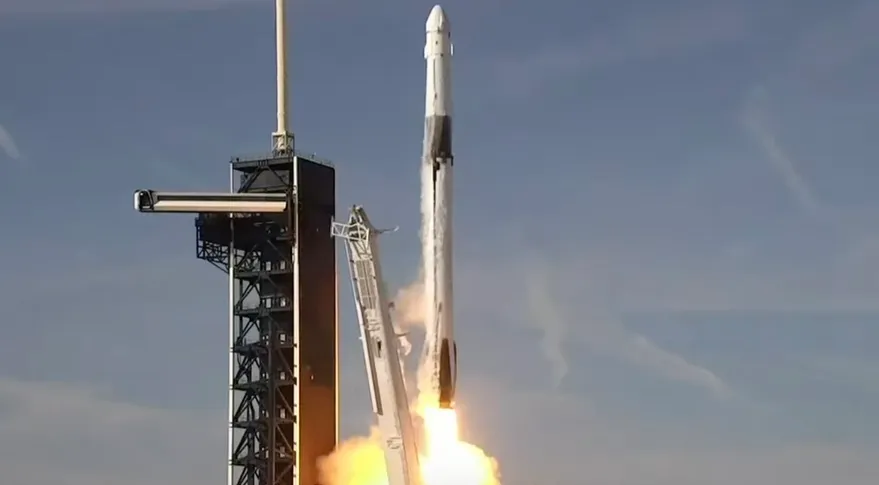
CAPE CANAVERAL, Fla. — NASA and SpaceX are preparing to launch the 35th Commercial Resupply Services mission to the International Space Station early Tuesday morning, carrying scientific investigations focused on astronaut health, plant biology, and medical research that could benefit future missions beyond low Earth orbit.
A SpaceX Falcon 9 rocket is scheduled to lift off from Space Launch Complex 40 at Cape Canaveral Space Force Station on October 13 at 6:33 a.m. EDT. The mission, designated CRS-35, will deliver research experiments, supplies, equipment, and additional hardware to the orbiting laboratory.
Among the scientific payloads are four investigations supported by NASA's Biological and Physical Sciences Division. The experiments will examine how the space environment affects human brain cells, agricultural crops, medical testing capabilities, and antibiotic-resistant bacteria.
Studying the Human Brain in Microgravity
One investigation will send three-dimensional, laboratory-grown models of human brain tissue to the space station for approximately five weeks.
Researchers will compare the space-flown tissue with identical samples maintained on Earth, looking for changes at the cellular level that could help explain how the brain responds to spaceflight.
Understanding these effects is particularly important as NASA prepares for longer missions to the Moon and eventually Mars, where astronauts could spend extended periods outside Earth's protective environment.
The findings may also contribute to broader research into neurological health and cellular responses to stress.
Protecting Crops for Future Space Missions
Another experiment will investigate how plant diseases develop in microgravity.
Researchers will study plants exposed to a disease-causing fungus, comparing specimens grown aboard the station with those cultivated under terrestrial conditions.
The investigation will examine molecular and structural changes to determine whether the space environment influences the progression or severity of plant infections.
Growing reliable food supplies will become increasingly important for missions that cannot depend on frequent deliveries from Earth.
Beyond providing nutrition, plants could contribute to environmental control systems by absorbing carbon dioxide, producing oxygen, and supporting water recycling.
The research could also offer useful information for developing disease-resistant crops on Earth.
Expanding Medical Testing in Orbit
CRS-35 will support another investigation involving a compact laboratory instrument known as a microplate reader.
The device, delivered to the station earlier this year, is designed to analyze biological samples and measure biomarkers, including proteins, antibodies, and antigens.
Scientists plan to evaluate its ability to provide timely results aboard the station rather than requiring samples to be returned to Earth for laboratory analysis.
The capability could improve medical monitoring during future deep-space expeditions, when returning samples or obtaining replacement supplies may not be practical.
Tracking Antibiotic-Resistant Bacteria
NASA will also continue an investigation into how antibiotic-resistant microorganisms survive and evolve aboard the space station.
During the fourth and final planned phase of the study, astronauts will collect repeated samples from surfaces throughout the orbital complex to monitor drug-resistant organisms.
The research could help scientists better understand how bacteria respond to the space environment and identify ways to reduce infection risks during extended missions.
It may also provide information relevant to antibiotic resistance, an ongoing public health concern on Earth.
Falcon 9 and Dragon Prepare for Launch
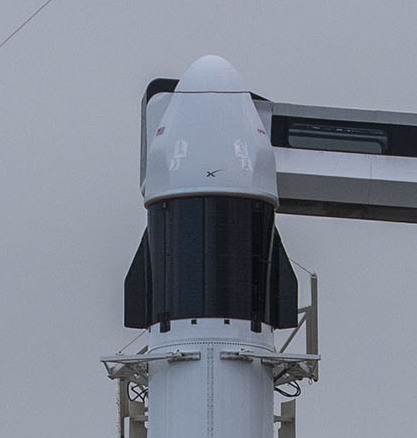
The CRS-35 mission will use a previously flown Cargo Dragon spacecraft, making its fourth trip to the International Space Station after supporting CRS-26, CRS-29, and CRS-33.
The Falcon 9 first-stage booster assigned to the flight will be making its eighth launch, continuing SpaceX's use of reusable hardware for NASA cargo transportation.
In addition to research equipment and crew supplies, Dragon will deliver the final set of International Space Station Roll-Out Solar Arrays, hardware designed to increase the station's electrical power generation capabilities.
Following launch, Dragon is expected to spend approximately 52 hours traveling to the station before autonomously docking on Thursday, October 15, at approximately 11 a.m. EDT.
If Tuesday's launch is delayed, SpaceX has identified a backup opportunity for Wednesday, October 14, at 6:08 a.m. EDT.
Once Dragon arrives, astronauts will begin unloading the spacecraft and preparing the experiments for operation, continuing research intended to support human exploration beyond Earth while providing scientific benefits on the ground.